
How to Deep Fry a Meme
A deep fried meme is an image that's been pushed past the point of no return — saturation maxed, contrast blown out, JPEG artifacts everywhere, sometimes with glowing red eyes and a bulging lens distortion. The worse it looks, the funnier it is. The style took off on Reddit's r/deepfriedmemes and never really left. Here's what "deep fried" actually means and how to make one in about ten seconds.
What does "deep fried" actually mean?
"Deep frying" a meme just means destroying its image quality on purpose. You crank up the saturation and contrast, re-save the image as a low-quality JPEG a few times to bake in artifacts, add noise, and optionally warp the geometry. Each pass makes it worse in a way that reads as chaotic and loud — which is the entire joke. There's no single correct amount; the spectrum runs from "lightly crispy" to "nuclear".
1. Deep fry a meme with lowqualitymemes
Our own Meme Deep Fryer is built for exactly this. Upload an image (or GIF), drag a single slider to set how fried you want it, and the editor handles saturation, contrast, noise, and JPEG crushing together — so you get a consistent deep-fried look instead of fiddling with five separate filters. Everything runs in your browser, nothing gets uploaded, and there's no watermark.
To deep fry a meme here:
1. Open the deep fryer and drop in your image.
2. Drag the fry intensity slider — start around the middle and push further if it's not loud enough.
3. Optional: add red eyes, a caption, or a bulge for the classic look.
4. Export and download your deep fried meme.
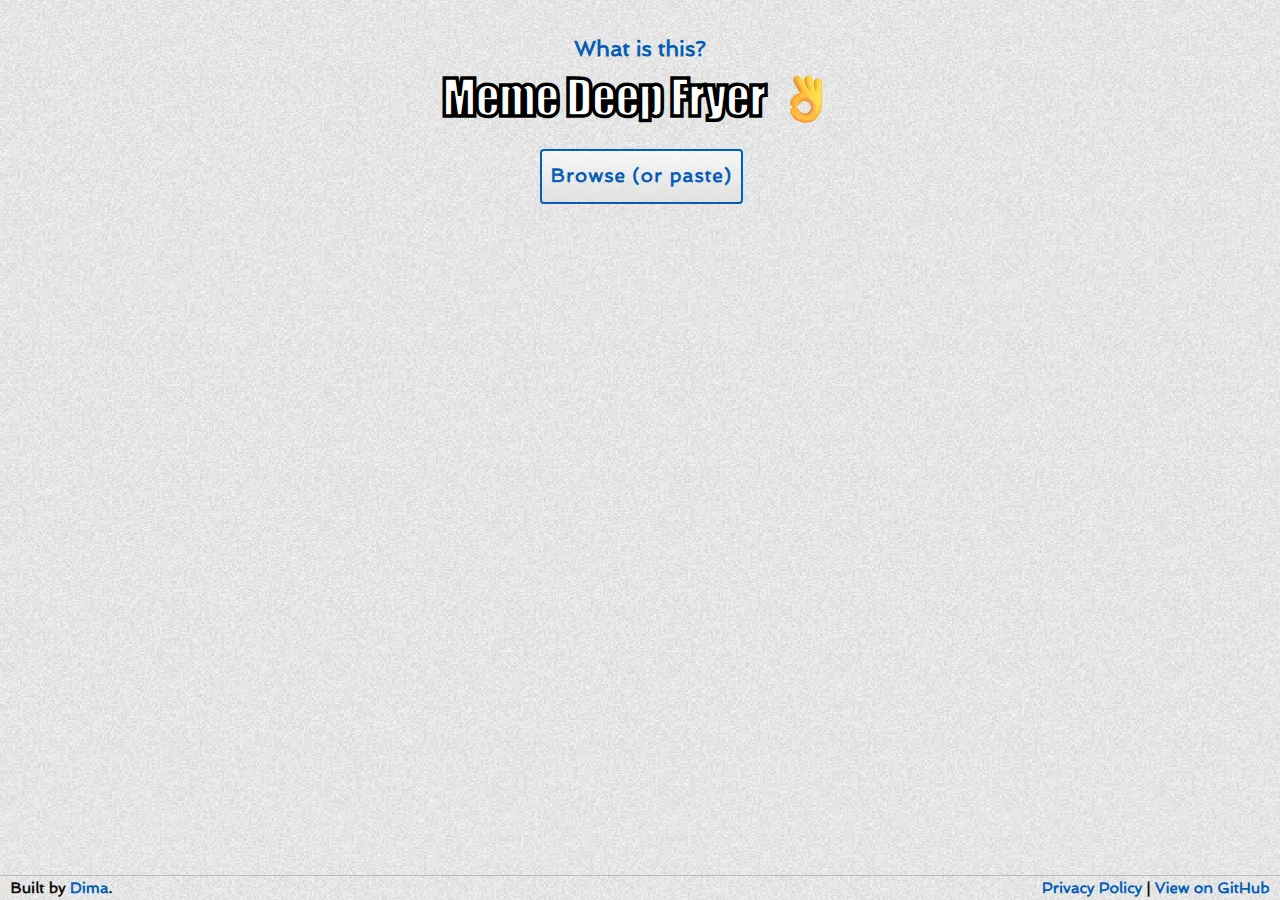
2. Deep fry memes with deepfriedmemes.com
The namesake of the genre. It's a no-frills tool: upload, pick a fry level, and download. It also does JPEG crushing and a bulging lens effect. Good for a single quick export, though the controls are blunter than a dedicated editor.
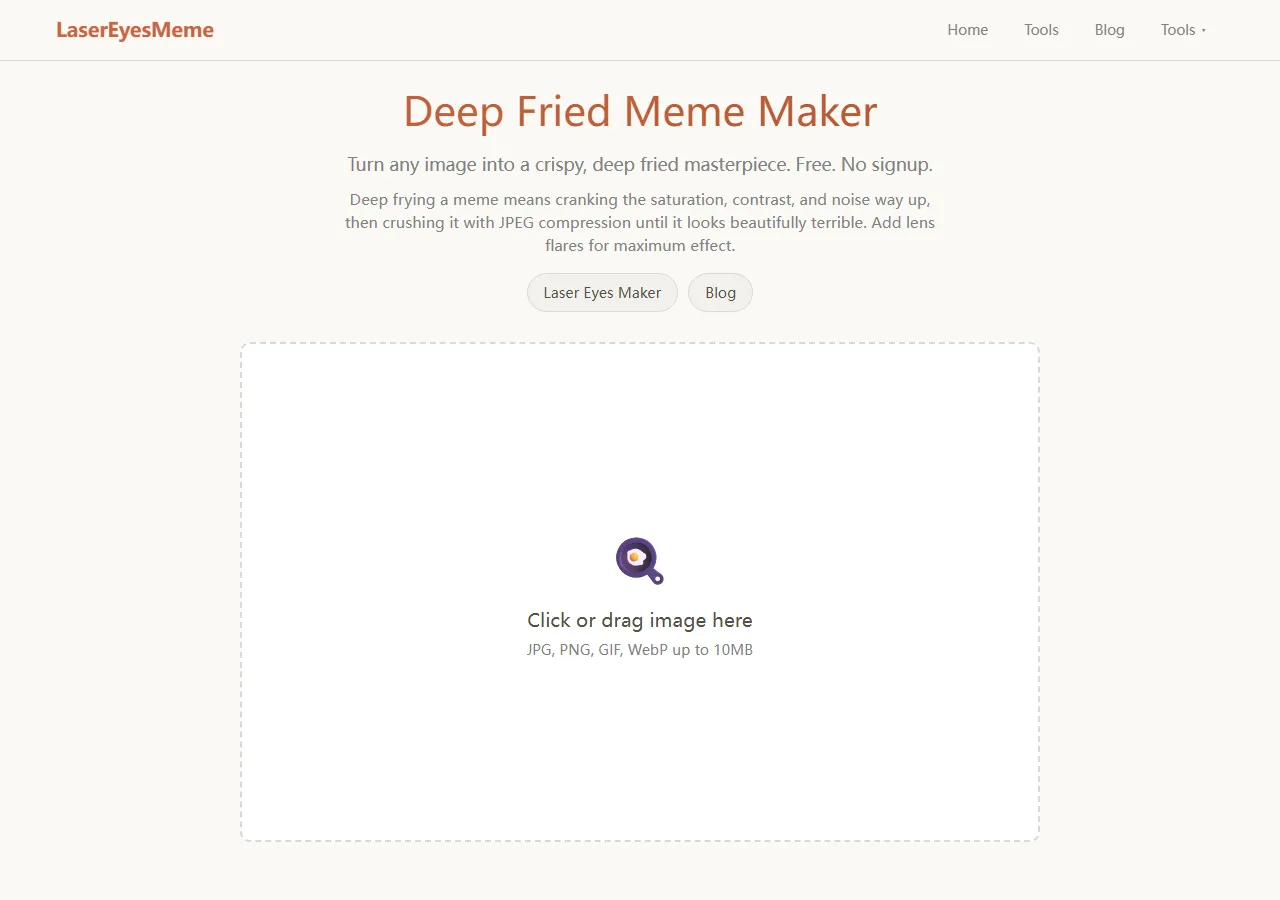
3. Deep fry with LaserEyeMeme
LaserEyeMeme's deep fry mode lets you dial the intensity from "light crispy" to "nuclear" and throws in laser eyes for free. Free and no signup, with a clean preview before you commit.
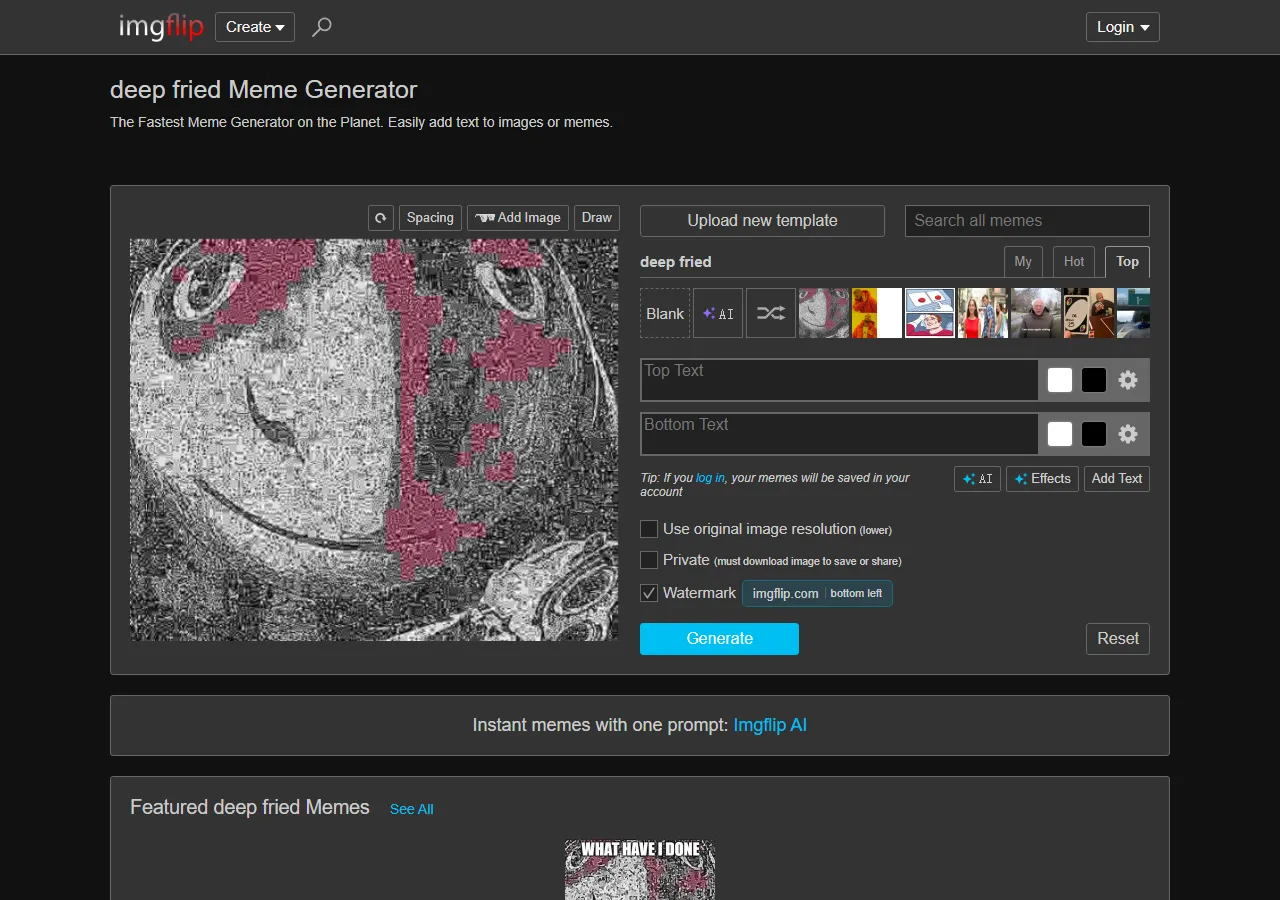
4. Make a deep fried meme on Imgflip
Imgflip's deep fried template is handy if you want to start from an existing meme format, fry it, and add text in the same place. The frying is lighter than dedicated tools, but the meme-template library is unmatched.
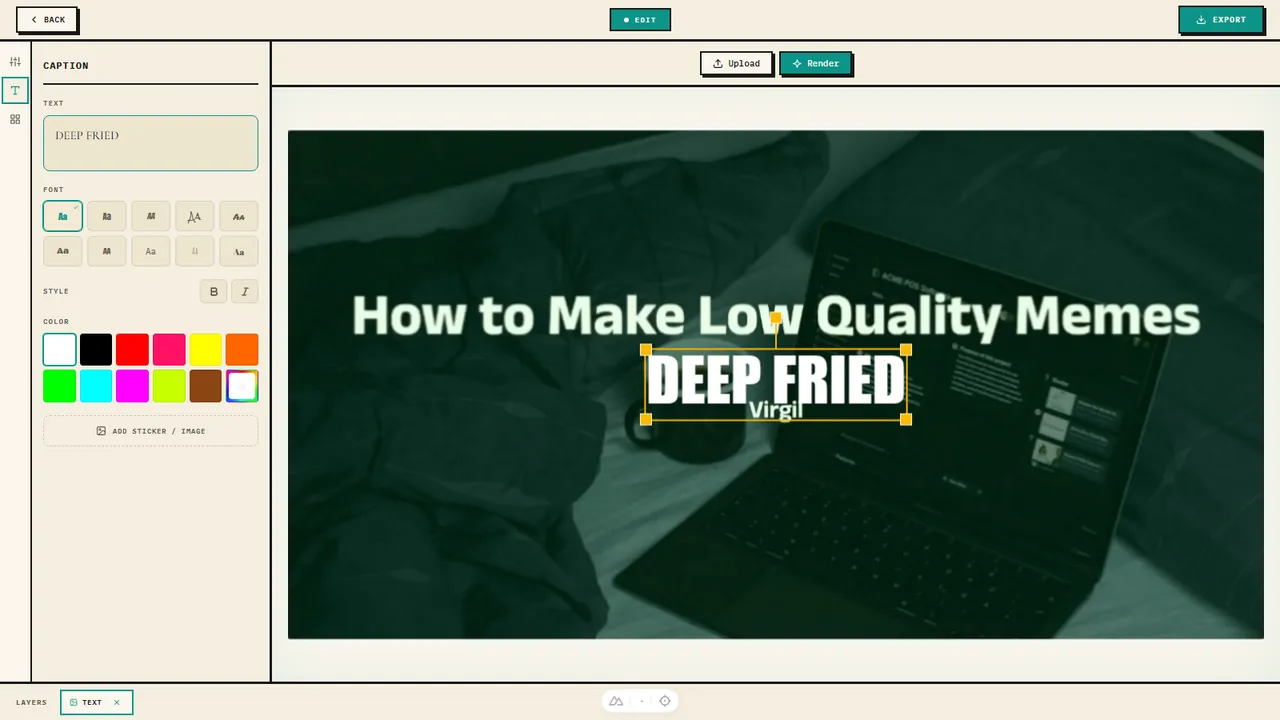
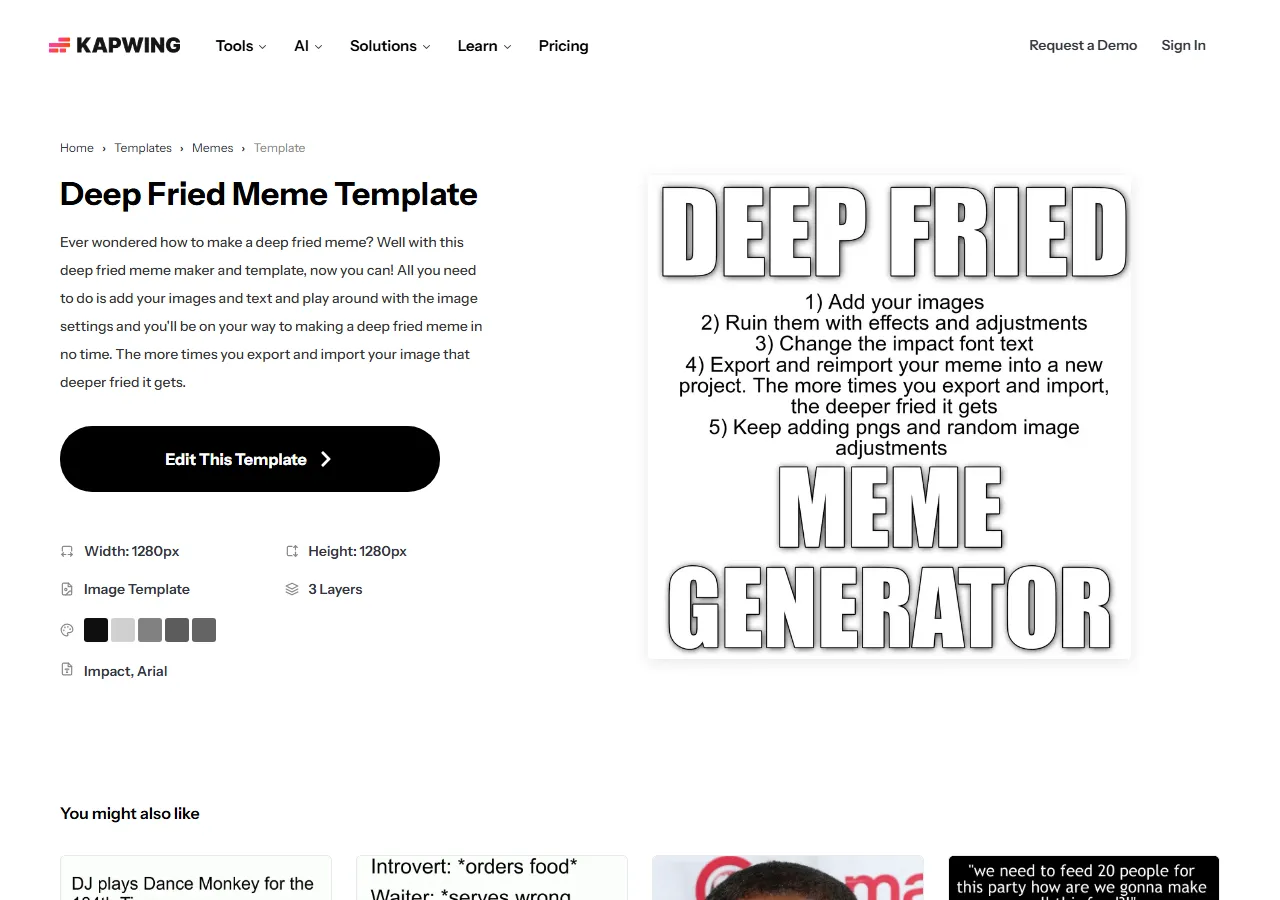
5. Deep fry with Kapwing
Kapwing's template approach gives you the most editing surface — you can fry the image, layer text and stickers, and export. It's heavier and pushes you toward an account, but it's the most "full editor" of the bunch.
What makes a meme look deep fried?
Crushed saturation and contrast. Colors get pushed to neon; shadows go pure black. This is the backbone of the look.
JPEG artifacts. Re-encoding at low quality creates the blocky, noisy texture that reads as "fried".
Noise and sharpening. Added grain and over-sharpening make the image feel abrasive.
Red eyes and bulging. Glowing red eyes and a lens bulge are the meme-community shorthand for "this has gone too far".
Frequently Asked Questions
What is a deep fried meme?
A deep fried meme is an image deliberately degraded — oversaturated, high-contrast, full of JPEG artifacts and noise — until it looks chaotic and loud. The bad quality is the joke.
Is deep frying a meme free?
Yes. Every tool in this list, including ours, has a free tier. Look out for watermarks on exports — the browser-based ones generally don't add them.
Can I deep fry a GIF?
Yes. The same effects apply to animated GIFs frame by frame. Our deep fryer and a couple of the others above accept GIFs directly.
Why do deep fried memes look so bad on purpose?
Because the humor comes from the exaggeration. Pushing an image several steps past "broken" turns it into a punchline — it's the visual equivalent of yelling.
Conclusion
Deep frying a meme is one of those effects that's more about committing than about finesse. For the classic look with the least effort, our Meme Deep Fryer does the whole stack in one slider; deepfriedmemes.com and LaserEyeMeme are great for a single quick fry; and Imgflip or Kapwing win if you want to start from a template. However you do it, the rule is the same: when in doubt, fry it more.